
 7
7








 asc(s | Automotive Simulation Center Stuttgart e.V.
Impressum
asc(s | Automotive Simulation Center Stuttgart e.V.
Impressum

 Vortrag des asc(s bei der “advanced
automotive battery conference“ in der
Rheingoldhalle Congress Centrum,
Mainz, Germany - June 18 - 22, 2012
Development and Validation
of a Thermal Simulation Model
for Li-Ion Batteries in HEVs/PEVs
Dr. Jenny Kremser, Project Manager,
Automotive Simulation Center Stuttgart e.V.
For the past four years now the Automotive Simulation Center Stuttgart e.V.
- asc(s - has managed to successfully bring together automotive
manufacturers, suppliers, soft- and hardware vendors, and science in the
precompetitive stage. The Adam Opel AG, Daimler AG, Dr. Ing. h.c. F.
Porsche AG, and the software companies CD-adapco and Battery Design
LLC are associated with and cooperate in the international asc(s project
“Development and Validation of a Thermal Simulation Model for Li-Ion
Batteries in Hybrid and Pure Electric Vehicles (HEV/PEV)”. The partners
are working towards a consistent development plan of a simulation
environment for the electrothermal layout of a lithium-ion battery module
which at present is being consistently implemented. Dr. Kremser from the
asc(s is in charge of the entire project coordination. The asc(s is the ideal
platform to promote the exemplary cooperation between practice, theory,
software development, model parameterization on an experimental basis,
and the validation of an electrochemical system. It is this combination of
expertise from all participating partners which is likely to achieve the best
possible results.
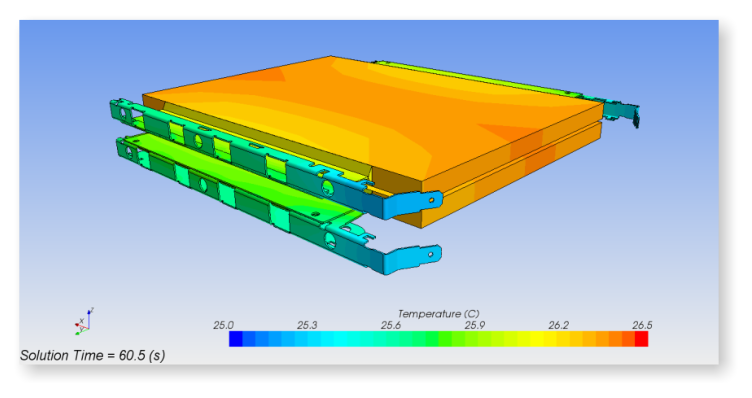
Our new simulation model couples a thermal fluid-mechanical 3D model of
the complete lithium-ion battery module including its cooling system (based
on the CAD data from Behr GmbH and Co. KG) with an electrothermal
circuit model. The latter describes the local current/voltage characteristics
as well as the locally released heat loss of the individual accumulators
(battery cells) built into the module. The overall model can be used to
investigate heat and energy management and to optimize the layout of the
battery cooling system. Knowledge about the temperature and charge
distribution between cells within the battery module is crucial, since
potential inhomogeneities can have a negative impact on battery life.
The developed simulation environment can be applied during the early
phase of the virtual vehicle development process to verify the narrow
electrothermal requirements on the battery module in coordination with
vehicle development. This is an important preliminary requirement for the
development of optimized design concepts for electrified vehicles to fulfill
increasing demands on energy consumption, driving range, and durability.
Kontakt
zur Übersicht
Vortrag des asc(s bei der “advanced
automotive battery conference“ in der
Rheingoldhalle Congress Centrum,
Mainz, Germany - June 18 - 22, 2012
Development and Validation
of a Thermal Simulation Model
for Li-Ion Batteries in HEVs/PEVs
Dr. Jenny Kremser, Project Manager,
Automotive Simulation Center Stuttgart e.V.
For the past four years now the Automotive Simulation Center Stuttgart e.V.
- asc(s - has managed to successfully bring together automotive
manufacturers, suppliers, soft- and hardware vendors, and science in the
precompetitive stage. The Adam Opel AG, Daimler AG, Dr. Ing. h.c. F.
Porsche AG, and the software companies CD-adapco and Battery Design
LLC are associated with and cooperate in the international asc(s project
“Development and Validation of a Thermal Simulation Model for Li-Ion
Batteries in Hybrid and Pure Electric Vehicles (HEV/PEV)”. The partners
are working towards a consistent development plan of a simulation
environment for the electrothermal layout of a lithium-ion battery module
which at present is being consistently implemented. Dr. Kremser from the
asc(s is in charge of the entire project coordination. The asc(s is the ideal
platform to promote the exemplary cooperation between practice, theory,
software development, model parameterization on an experimental basis,
and the validation of an electrochemical system. It is this combination of
expertise from all participating partners which is likely to achieve the best
possible results.
Our new simulation model couples a thermal fluid-mechanical 3D model of
the complete lithium-ion battery module including its cooling system (based
on the CAD data from Behr GmbH and Co. KG) with an electrothermal
circuit model. The latter describes the local current/voltage characteristics
as well as the locally released heat loss of the individual accumulators
(battery cells) built into the module. The overall model can be used to
investigate heat and energy management and to optimize the layout of the
battery cooling system. Knowledge about the temperature and charge
distribution between cells within the battery module is crucial, since
potential inhomogeneities can have a negative impact on battery life.
The developed simulation environment can be applied during the early
phase of the virtual vehicle development process to verify the narrow
electrothermal requirements on the battery module in coordination with
vehicle development. This is an important preliminary requirement for the
development of optimized design concepts for electrified vehicles to fulfill
increasing demands on energy consumption, driving range, and durability.
Kontakt
zur Übersicht


 7
Beteiligung des asc(s beim 16. VDI-
Kongress SIMVEC – Berechnung,
Simulation und Erprobung im Fahr-
zeugbau am 20. und 21. November 2012
im Kongresshaus Baden-Baden
Berechnung, Simulation und Erprobung im Rahmen der Fahrzeugent-
wicklung haben einen sehr hohen Stellenwert und eine inzwischen schon
lange Tradition. Doch die Weiterentwicklungen und neue Fahrzeug-
technologien erfordern immer innovativere und neu ausrichtbare Methoden
und Tools, sowie deren Anwendung. Mit Hilfe der computerunterstützten
Methoden, komplexen Erprobungseinrichtungen und eine teilweise
Verlagerung von Straßenerprobungen in das Prüflabor wird der Produkt-
entstehungsprozess wesentlich effizienter. Gleichzeitig sind damit
Technologien verfügbar, mit denen der Reifegrad und die Produktqualität
erheblich verbessert werden können. Die Integration der virtuellen
Verfahren in die Arbeitsabläufe hat zu einer engen Verknüpfung mit der
Versuchstechnik geführt. Erst durch die damit möglichen Synergien können
virtuelle Methoden einen optimalen Nutzen bringen.
Auch dieses Jahr beteiligt sich das asc(s am VDI-Kongress SIMVEC in
Baden-Baden sowohl bei der Fachausstellung als auch mit 2 Vorträgen
zu folgenden Themenbereichen:
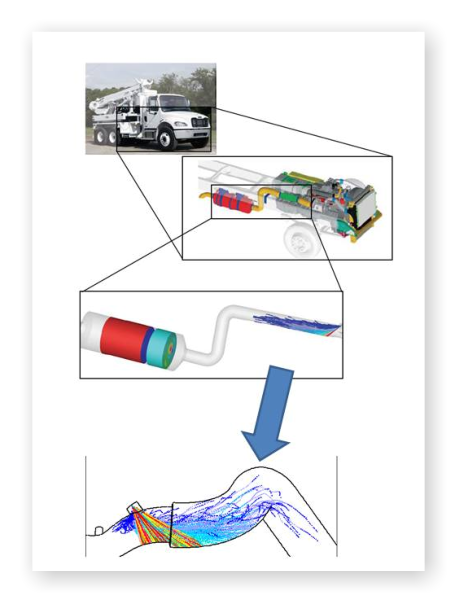
Li-ion battery simulation strategies and validated
implementations for the virtual development
process of electrified vehicles
•
Simulation strategies and approaches
•
Li-ion battery multiphysics
•
CAE Design and thermal management of battery modules
•
Validation results
•
Automotive Simulation Center Stuttgart
Dr.-Ing. Stephan Fell, Manager, Advanced Propulsion CAE &
H2 Technology, Adam Opel AG, Rüsselsheim
Dr. Jenny Kremser, Project Manager,
Automotive Simulation Center Stuttgart e.V.
Das diskrete Mehrkomponentenmodell:
Effizienter Einsatz zur Simulation realer
Kraftstoffe in kommerziellen CFD-Codes
•
Modellierung von realem Kraftstoff
•
Transportmechanismen bei verdunstenden Kraftstofftropfen
•
Tropfen/Wandinteraktionsmodell
•
Verdunstung von Wandfilmen
Dipl.-Ing. Jérôme Munier, Project Manager,
Automotive Simulation Center Stuttgart e.V.
Diskutieren Sie mit unseren Simulationsexperten über diese beiden hoch
aktuellen Spezialthemen zur weiteren CO2-Reduktion. Wir freuen uns,
Sie in Baden-Baden persönlich dazu begrüßen zu dürfen.
7
Beteiligung des asc(s beim 16. VDI-
Kongress SIMVEC – Berechnung,
Simulation und Erprobung im Fahr-
zeugbau am 20. und 21. November 2012
im Kongresshaus Baden-Baden
Berechnung, Simulation und Erprobung im Rahmen der Fahrzeugent-
wicklung haben einen sehr hohen Stellenwert und eine inzwischen schon
lange Tradition. Doch die Weiterentwicklungen und neue Fahrzeug-
technologien erfordern immer innovativere und neu ausrichtbare Methoden
und Tools, sowie deren Anwendung. Mit Hilfe der computerunterstützten
Methoden, komplexen Erprobungseinrichtungen und eine teilweise
Verlagerung von Straßenerprobungen in das Prüflabor wird der Produkt-
entstehungsprozess wesentlich effizienter. Gleichzeitig sind damit
Technologien verfügbar, mit denen der Reifegrad und die Produktqualität
erheblich verbessert werden können. Die Integration der virtuellen
Verfahren in die Arbeitsabläufe hat zu einer engen Verknüpfung mit der
Versuchstechnik geführt. Erst durch die damit möglichen Synergien können
virtuelle Methoden einen optimalen Nutzen bringen.
Auch dieses Jahr beteiligt sich das asc(s am VDI-Kongress SIMVEC in
Baden-Baden sowohl bei der Fachausstellung als auch mit 2 Vorträgen
zu folgenden Themenbereichen:
Li-ion battery simulation strategies and validated
implementations for the virtual development
process of electrified vehicles
•
Simulation strategies and approaches
•
Li-ion battery multiphysics
•
CAE Design and thermal management of battery modules
•
Validation results
•
Automotive Simulation Center Stuttgart
Dr.-Ing. Stephan Fell, Manager, Advanced Propulsion CAE &
H2 Technology, Adam Opel AG, Rüsselsheim
Dr. Jenny Kremser, Project Manager,
Automotive Simulation Center Stuttgart e.V.
Das diskrete Mehrkomponentenmodell:
Effizienter Einsatz zur Simulation realer
Kraftstoffe in kommerziellen CFD-Codes
•
Modellierung von realem Kraftstoff
•
Transportmechanismen bei verdunstenden Kraftstofftropfen
•
Tropfen/Wandinteraktionsmodell
•
Verdunstung von Wandfilmen
Dipl.-Ing. Jérôme Munier, Project Manager,
Automotive Simulation Center Stuttgart e.V.
Diskutieren Sie mit unseren Simulationsexperten über diese beiden hoch
aktuellen Spezialthemen zur weiteren CO2-Reduktion. Wir freuen uns,
Sie in Baden-Baden persönlich dazu begrüßen zu dürfen.


 Advanced Automotive Battery Conference